
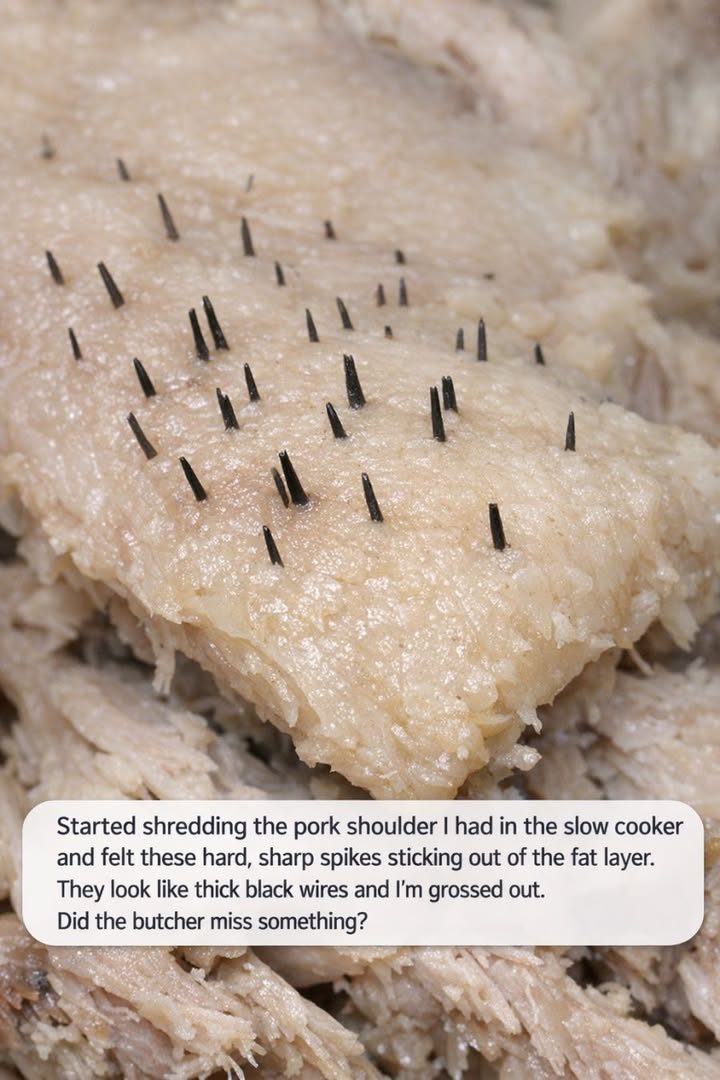
Cooking a pork shoulder in a slow cooker is often a delightful experience, promising tender, flavorful meat after hours of slow simmering. However, the discovery of unexpected elements in your meal can be quite jarring. Imagine reaching into your slow cooker, ready to shred the pork, only to find hard, sharp spikes protruding from the fat layer. Such an experience can quickly turn anticipation into concern.
These unexpected protrusions might look like thick black wires, and it’s natural to wonder if your butcher missed something during the preparation process. While this occurrence can certainly be off-putting, understanding what these spikes are and why they appear in your pork can help alleviate concerns and guide you on how to handle them safely.
1. What Those Hard, Sharp Spikes in Your Pork Shoulder Actually Are
The hard, sharp spikes that you may encounter in a pork shoulder are most likely pig bristles. These bristles are the hair of the pig, which can sometimes remain attached to the skin or fat layer of the meat. Pig bristles are known for being particularly thick and coarse, often measuring up to 1 millimeter in diameter. This thickness and their dark color can indeed make them look like thick black wires, especially when cooked.
While pig bristles are not a common sight in well-processed pork, they do occasionally occur, particularly in cuts that include the skin or a significant fat layer. This is because the bristles are naturally embedded in the skin and can be difficult to remove completely during processing.
2. How Pig Bristles End Up Left on Pork Skin and Fat
The process of removing pig hair during slaughter involves several steps, including scalding, scraping, and singeing. Scalding the carcass in hot water loosens the hair, making it easier to scrape off. However, if the water temperature is not maintained precisely between 62 and 68 degrees Celsius, or if the scraping is not thorough, some bristles may remain.
Additionally, the singeing process, which involves passing the carcass through a flame to burn off any remaining hair, can sometimes be insufficient if not done properly. This is especially true if the hair follicles are deeply embedded or if the bristles are particularly coarse. As a result, some bristles may remain on the skin or fat, particularly in less visible areas.
3. Is It Safe to Eat Pork That Still Has Bristles Attached?
While the presence of pig bristles may be unappetizing, they do not pose a significant health risk if consumed. Bristles are made of keratin, the same protein that makes up human hair and nails, and are not harmful if ingested in small amounts. However, they can be quite unpleasant due to their texture and appearance.
Most people prefer to remove visible bristles before eating, as they can detract from the overall enjoyment of the meal. It is also advisable to remove them to avoid any potential choking hazard, especially if dining with children or individuals who may not notice them while eating.
4. How to Tell Pig Bristles From Bone Fragments, Twine, or Metal
Distinguishing pig bristles from other foreign objects such as bone fragments, twine, or metal can be done by examining their characteristics. Pig bristles are typically dark, thick, and wiry, with a distinct texture that is different from bone or metal. They are flexible to some extent, unlike bone fragments which are rigid and brittle.
If you suspect twine or metal, look for a uniform texture and color, as twine is usually woven and metal is smooth and shiny. If in doubt, you can test the material by trying to bend it; bristles will bend but not break easily, while bone fragments may snap.
5. When a Missed Bristle Is a Normal Slip—and When to Call the Butcher
Finding a few bristles on your pork shoulder is generally considered a normal slip in processing and does not necessarily warrant concern. These are minor oversights that can happen even in well-regulated facilities. However, if you find a significant number of bristles or if the meat appears unclean or improperly processed in other ways, it might be worth contacting your butcher to report the issue.
Communicating with the butcher can help them improve their processes, and they may offer a replacement or refund as a gesture of good customer service. Additionally, if you notice any signs of contamination or spoilage, such as an off smell or unusual color, it is important to notify the butcher and avoid consuming the meat.
6. Step-By-Step: How to Remove Bristles Before or After Cooking
Removing bristles from pork can be done either before or after cooking, though it is often easier to spot them after cooking due to the color contrast. Before cooking, inspect the surface of the meat closely, and use tweezers or pliers to pull out any visible bristles. Ensure you check the entire surface, especially areas with fat or skin.
After cooking, you can use a similar method to remove bristles, though they may be more challenging to spot. Using a fork or your fingers, gently probe the meat to locate any remaining bristles. Pull them out carefully, ensuring you do not break them and that the entire bristle is removed.
7. Should You Return or Toss Pork With Visible Bristles?
Deciding whether to return or toss pork with visible bristles depends on the extent and your comfort level. If there are only a few bristles, you can remove them and continue enjoying the meal. However, if the presence of bristles is extensive or if you are uncomfortable, returning the product to the store or contacting the butcher for a refund may be a better option.
It is essential to assess the overall quality of the meat. If the bristles are accompanied by other issues, such as spoilage or improper processing, it would be prudent to avoid consuming the meat and seek a replacement.
8. How Butchers Are Supposed to Remove Hair During Processing
Butchers follow a specific process to remove hair from pork during slaughter and processing. This typically involves scalding the carcass in hot water to loosen the hair, followed by scraping and singeing to remove any remaining hair. The scalding process is crucial, as the temperature must be high enough to loosen the hair but not so high as to damage the skin.
After scalding, a mechanical or manual scraping process removes the bulk of the hair. Finally, the carcass is singed to burn off any residual hair. This multi-step process is designed to ensure that the pork is clean and free from bristles before it reaches consumers.
9. What This Means for Food Safety Standards and Inspection
The presence of bristles in pork highlights the importance of stringent food safety standards and regular inspection procedures in the meat processing industry. While bristles themselves may not pose a significant health risk, their presence can indicate lapses in the processing chain. Therefore, regular inspections and adherence to food safety protocols are essential to maintain consumer confidence and ensure product quality.
Regulatory bodies set guidelines for processing facilities to minimize the occurrence of such issues, and regular audits help ensure compliance. Consumers can also contribute by reporting any inconsistencies, prompting facilities to reassess and improve their processes.
10. Tips for Checking Pork Roasts and Shoulders Before You Cook
Before cooking a pork roast or shoulder, take a few moments to inspect the surface for any visible bristles or other foreign objects. This can be done by running your hands over the surface to feel for any protrusions or irregularities. Use a bright light to help spot any dark bristles against the lighter meat.
If you spot any bristles, use tweezers to remove them before cooking. This simple step can enhance your dining experience by ensuring the meat is as clean and enjoyable as possible. Additionally, consider purchasing pork from reputable sources known for high-quality processing standards.
11. When to Worry—and When to Just Be Grossed Out but Keep Eating
Encountering bristles in your pork can be unsettling, but it’s important to assess the situation rationally. If the meat otherwise appears fresh and well-processed, it’s likely just an unfortunate oversight rather than a cause for concern. Remove the bristles and enjoy your meal, knowing that they do not pose a significant health risk.
However, if the presence of bristles is accompanied by other signs of poor quality or improper processing, such as an off smell or abnormal color, it may be wise to refrain from eating the meat. In such cases, contacting the butcher or store for a replacement or refund is advisable, ensuring your safety and satisfaction.
