
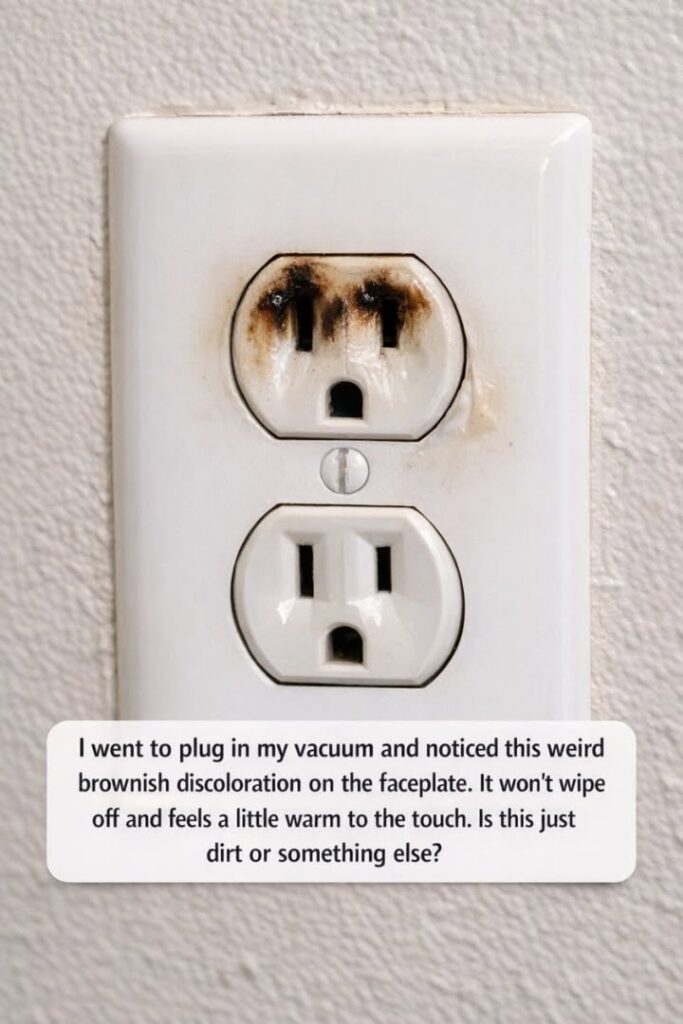
As I prepared for a routine cleaning day, I reached for my trusty vacuum cleaner. It was an ordinary task, but as I went to plug in the vacuum, I noticed something that made me pause. The faceplate of the outlet was marked with a peculiar brownish discoloration. Initially, I thought it might be dirt or dust, a common occurrence in any household.
However, a closer inspection revealed that this was not a simple case of neglect. The discoloration wouldn’t wipe off, and to my surprise, the outlet felt slightly warm to the touch. This unexpected discovery prompted concerns about the safety of my electrical system, compelling me to dig deeper into what this odd manifestation could mean.
1. Why That Brownish Discoloration Is a Red Flag, Not Just Dirt
Brownish discoloration on an outlet’s faceplate is more than just an aesthetic issue; it is often a warning sign of an underlying electrical problem. Unlike superficial dirt or dust, which can be easily wiped away, discoloration resulting from electrical faults is generally more stubborn and indicates potential overheating.
When an electrical outlet experiences excessive heat due to poor connections or overloading, it can cause the plastic faceplate to char or burn slightly, leading to the brownish markings. This is a red flag because it suggests that the outlet might be operating under unsafe conditions, which could potentially lead to electrical fires if left unaddressed.
2. How Overheating Outlets Leave Burn Marks on Faceplates
Overheating in electrical outlets can occur when the flow of electricity generates more heat than the outlet can safely dissipate. This can happen when outlets are overloaded with high-wattage appliances or when there are poor connections within the outlet itself. As the heat increases, it can cause the plastic materials of the outlet and faceplate to degrade or burn, resulting in visible discolorations.
Typically, the National Electrical Code (NEC) specifies that outlets should not exceed a temperature rise of 30 degrees Celsius above ambient temperature. If an outlet feels warm to the touch, it might be exceeding this limit, which can result in damage to the outlet and surrounding areas, manifesting as burn marks or discoloration on the faceplate.
3. The Role of Loose Connections, Backstabbed Wires, and Worn Receptacles
Loose connections and backstabbed wires are common culprits in overheating issues. When wires are not securely connected, they can create a high-resistance connection, which then generates heat as electricity flows through it. This is particularly true for backstabbed wire connections, where wires are pushed into quick-connect slots instead of being securely wrapped around terminal screws.
Worn receptacles can also contribute to overheating. Over time, the metal contacts within an outlet can lose their tension, leading to poor connections with plugs. This can cause sparking or arcing and, subsequently, heat buildup, which can lead to the discoloration of the faceplate and potential electrical fires.
4. Warm to the Touch: When Outlet Temperature Becomes Dangerous
An outlet that feels warm to the touch is a potential safety hazard. While it is normal for electrical devices to generate some heat during operation, the outlet itself should not become noticeably warm. This could indicate excessive current flow or resistance within the outlet, which are conditions conducive to overheating.
When the temperature of an outlet exceeds safe levels, it can degrade the materials used in the outlet and faceplate, increasing the risk of electrical fires. It is crucial to monitor and address any outlets that feel warm, as this could be a precursor to more severe electrical issues.
5. Other Clues It’s Electrical Damage, Not Everyday Grime
In addition to discoloration, there are other signs that can indicate electrical damage rather than everyday grime. These include a burning smell near the outlet, frequent tripping of circuit breakers, or flickering lights. These symptoms suggest that the electrical system is under stress and may require immediate attention.
Furthermore, if the outlet shows signs of melting or if there are scorch marks around the plug-in holes, these are clear indicators of electrical damage. Such signs warrant further investigation to prevent potential hazards.
6. What To Do Immediately When You Spot Discoloration
The first step upon noticing discoloration is to unplug any devices connected to the affected outlet to prevent further electrical flow and potential overheating. It’s important to avoid using the outlet until it has been inspected by a professional.
Additionally, you should inspect other outlets in the vicinity to check for similar issues. Documenting the problem with photos can also be helpful when explaining the situation to an electrician.
7. When You Must Stop Using the Outlet and Shut Off Power
If the outlet feels hot, emits a burning smell, or shows signs of melting or burning, it is crucial to stop using it immediately and shut off the power to that circuit from the main electrical panel. This will prevent further damage and reduce the risk of electrical fires.
Shutting off the power ensures that no current flows to the problematic outlet, allowing for a safer inspection and repair process by a qualified electrician.
8. How an Electrician Diagnoses and Fixes an Overheating Outlet
An electrician will begin by inspecting the outlet and the wiring behind it to determine the source of the overheating. They may use tools like infrared thermometers to measure temperature differences and identify hotspots.
Once the cause is identified, repairs may involve tightening loose connections, replacing damaged wires or outlets, and ensuring that the circuit is not overloaded. The electrician will also check for compliance with local electrical codes to ensure safety.
9. Replacing Faceplates, Outlets, and Cords Safely
Replacing a discolored faceplate or outlet should only be done by someone with electrical knowledge, as incorrect handling can lead to further issues. It’s important to ensure that the replacement outlet is rated for the appropriate amperage and is properly grounded.
For cords that have been damaged due to overheating, replacement is necessary to prevent future risks. Damaged cords can often be replaced with new ones that are rated for higher wattage to prevent similar issues.
10. Preventing Future Overheating: Safer Plug-In Habits
To prevent future overheating, avoid overloading outlets with multiple high-wattage devices. Use power strips with built-in circuit breakers to manage load distribution safely.
Regularly inspect outlets and cords for wear and damage, and unplug devices when they are not in use. These habits ensure that electrical systems operate within safe parameters, reducing the risk of overheating and related hazards.
11. When It’s Time to Upgrade Old Wiring and Outlets
Old wiring and outlets may not be equipped to handle the electrical demands of modern appliances. If electrical issues persist despite repairs, it might be time to consider upgrading the electrical system.
Consulting with a licensed electrician to assess the condition of the wiring and outlets is a prudent step. Upgrading to modern, code-compliant wiring and outlets can enhance safety and efficiency, providing peace of mind and protection against electrical hazards.
Worn receptacles can also contribute to overheating. Over time, the metal contacts within an outlet can lose their tension, leading to poor connections with plugs. This can cause sparking or arcing and, subsequently, heat buildup, which can lead to the discoloration of the faceplate and potential electrical fires.
4. Warm to the Touch: When Outlet Temperature Becomes Dangerous
An outlet that feels warm to the touch is a potential safety hazard. While it is normal for electrical devices to generate some heat during operation, the outlet itself should not become noticeably warm. This could indicate excessive current flow or resistance within the outlet, which are conditions conducive to overheating.
When the temperature of an outlet exceeds safe levels, it can degrade the materials used in the outlet and faceplate, increasing the risk of electrical fires. It is crucial to monitor and address any outlets that feel warm, as this could be a precursor to more severe electrical issues.
5. Other Clues It’s Electrical Damage, Not Everyday Grime
In addition to discoloration, there are other signs that can indicate electrical damage rather than everyday grime. These include a burning smell near the outlet, frequent tripping of circuit breakers, or flickering lights. These symptoms suggest that the electrical system is under stress and may require immediate attention.
Furthermore, if the outlet shows signs of melting or if there are scorch marks around the plug-in holes, these are clear indicators of electrical damage. Such signs warrant further investigation to prevent potential hazards.
6. What To Do Immediately When You Spot Discoloration
The first step upon noticing discoloration is to unplug any devices connected to the affected outlet to prevent further electrical flow and potential overheating. It’s important to avoid using the outlet until it has been inspected by a professional.
Additionally, you should inspect other outlets in the vicinity to check for similar issues. Documenting the problem with photos can also be helpful when explaining the situation to an electrician.
7. When You Must Stop Using the Outlet and Shut Off Power
If the outlet feels hot, emits a burning smell, or shows signs of melting or burning, it is crucial to stop using it immediately and shut off the power to that circuit from the main electrical panel. This will prevent further damage and reduce the risk of electrical fires.
Shutting off the power ensures that no current flows to the problematic outlet, allowing for a safer inspection and repair process by a qualified electrician.
8. How an Electrician Diagnoses and Fixes an Overheating Outlet
An electrician will begin by inspecting the outlet and the wiring behind it to determine the source of the overheating. They may use tools like infrared thermometers to measure temperature differences and identify hotspots.
Once the cause is identified, repairs may involve tightening loose connections, replacing damaged wires or outlets, and ensuring that the circuit is not overloaded. The electrician will also check for compliance with local electrical codes to ensure safety.
9. Replacing Faceplates, Outlets, and Cords Safely
Replacing a discolored faceplate or outlet should only be done by someone with electrical knowledge, as incorrect handling can lead to further issues. It’s important to ensure that the replacement outlet is rated for the appropriate amperage and is properly grounded.
For cords that have been damaged due to overheating, replacement is necessary to prevent future risks. Damaged cords can often be replaced with new ones that are rated for higher wattage to prevent similar issues.
10. Preventing Future Overheating: Safer Plug-In Habits
To prevent future overheating, avoid overloading outlets with multiple high-wattage devices. Use power strips with built-in circuit breakers to manage load distribution safely.
Regularly inspect outlets and cords for wear and damage, and unplug devices when they are not in use. These habits ensure that electrical systems operate within safe parameters, reducing the risk of overheating and related hazards.
11. When It’s Time to Upgrade Old Wiring and Outlets
Old wiring and outlets may not be equipped to handle the electrical demands of modern appliances. If electrical issues persist despite repairs, it might be time to consider upgrading the electrical system.
Consulting with a licensed electrician to assess the condition of the wiring and outlets is a prudent step. Upgrading to modern, code-compliant wiring and outlets can enhance safety and efficiency, providing peace of mind and protection against electrical hazards.
