
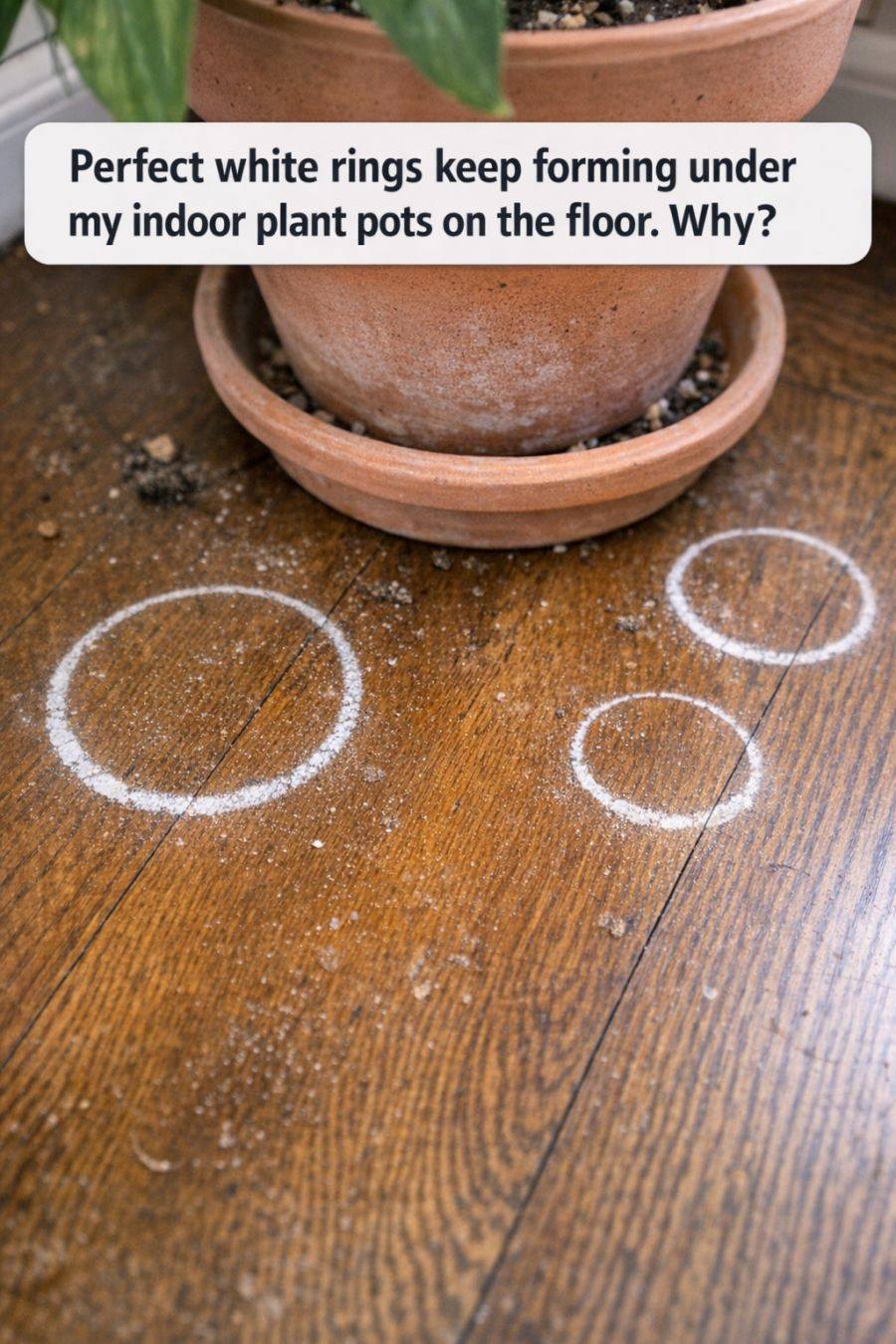
It’s a common and perplexing sight for plant enthusiasts: those perfect white rings that mysteriously appear on the floor beneath indoor plant pots. These rings can be frustrating, especially when they mar the appearance of your beautiful wooden floors or tiles. But what causes them, and how can you prevent them from reappearing?
Understanding the origin of these white rings not only helps in maintaining the aesthetic integrity of your home but also ensures the health of your beloved indoor plants. By delving into the science behind these marks, we can uncover practical solutions to prevent them from forming in the first place.
Advertisement
1. What Those Mysterious White Rings Actually Are
The white rings you see are typically deposits of mineral salts that have leached out from the soil and accumulated on the surface of your floor. When water evaporates, it leaves behind these mineral residues, which appear as white, crusty rings. These deposits are primarily composed of calcium carbonate, magnesium, and other minerals commonly found in both tap water and potting soil.
While these rings are unsightly, they are usually harmless. However, they can signal underlying issues with your watering practices or the type of water being used. The presence of these rings is an indication that minerals are being deposited faster than they can be naturally washed away or absorbed by the plant.
2. How Mineral Runoff From Potting Soil Creates Floor Stains
Potting soil often contains a mix of organic matter and minerals designed to provide nutrients to plants. When you water your plants, especially in excess, the water can dissolve these minerals. As the water drains through the soil, it carries dissolved minerals with it. This process is known as leaching.
When the leachate reaches the base of the pot and seeps out, it can leave behind mineral deposits on the floor as the water evaporates. This is particularly common in porous pots and soils that are not well-draining, leading to excess water pooling at the base.
3. Hard Tap Water And Fertilizers: The Hidden Culprits
Hard tap water is water that contains high levels of dissolved minerals, particularly calcium and magnesium. When this water is used to irrigate plants, these dissolved minerals can accumulate in the potting soil and eventually seep out, forming those white rings on the floor.
Fertilizers can exacerbate this problem. Many fertilizers are salt-based, and using them frequently can lead to a buildup of saline residues in the soil. Over time, as you water the plants, these salts are washed out and contribute to the white rings you see.
4. Why Certain Pots Leak More Salts Than Others
The material of your plant pot can significantly influence the amount of mineral runoff. Clay and terracotta pots, for example, are porous and allow water to seep through their walls. This can result in more mineral deposits as water and dissolved salts gradually make their way through the pot material and evaporate on the floor beneath.
Plastic and glazed ceramic pots, on the other hand, are less porous and tend to retain water better, reducing the likelihood of mineral seepage. However, if these pots have poor drainage or if they are overwatered, even they can contribute to the problem.
5. The Role Of Overwatering And Poor Drainage
Overwatering is a common mistake that leads to the formation of white rings. When plants are overwatered, excess water accumulates at the bottom of the pot, carrying with it dissolved minerals. This mixture can then leak out through drainage holes or porous pot walls, leaving mineral deposits as it evaporates.
Poor drainage exacerbates this issue, as water that cannot escape easily from the pot remains in contact with the soil and continues to dissolve and leach minerals. Ensuring that your pots have adequate drainage holes and using well-draining soil can help mitigate this problem.
6. Porous Floors Vs. Sealed Floors: Why The Rings Stick
The type of flooring you have can also affect the visibility and persistence of mineral rings. Porous floors, such as unsealed wood or stone, can absorb the mineral-laden water, making the stains difficult to remove. These surfaces allow the minerals to penetrate deeper, which can lead to more persistent staining.
Sealed floors, such as those with a polyurethane finish or glazed tiles, are less likely to absorb moisture. While mineral rings can still form, they are generally easier to clean as the minerals remain on the surface.
7. When Mold, Mildew, Or Efflorescence Join The Mix
In damp conditions, the rings may not just be mineral deposits but can also involve mold or mildew growth. These fungi thrive in moist environments, and if water continuously seeps out of plant pots, it can create a perfect breeding ground for them.
