
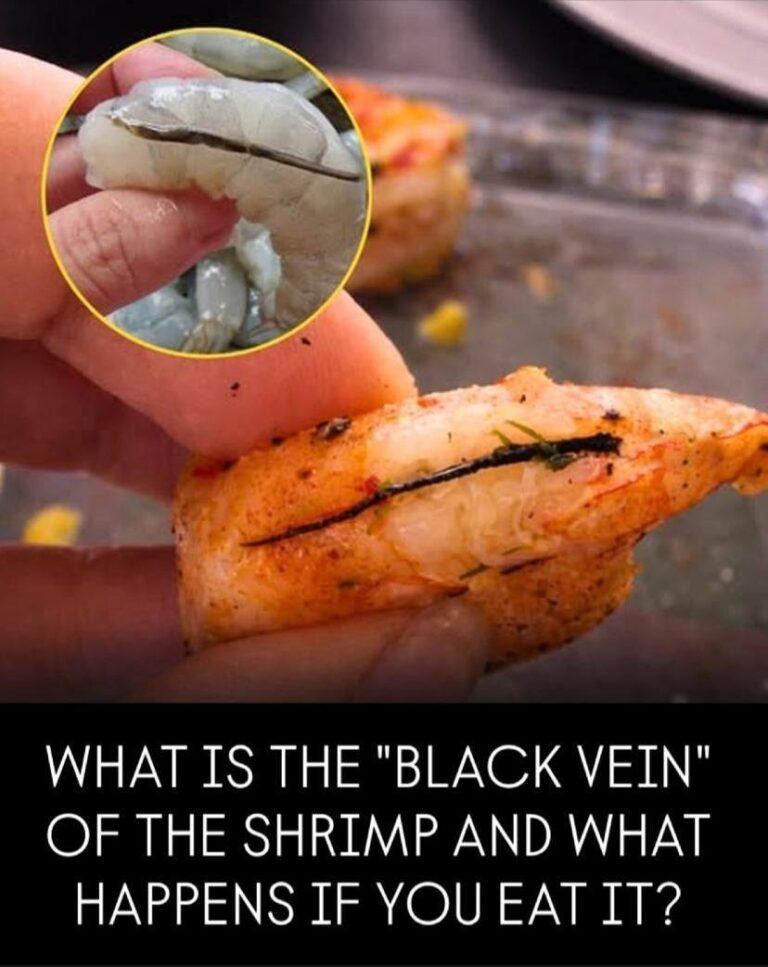
At first glance, shrimp is one of the most prized foods in world cuisine . Its delicate flavor and versatility make it a star ingredient in both simple recipes and sophisticated dishes. However, there’s a small but striking feature that often sparks questions, debates, and even myths in everyday cooking: the so-called “vein” of the shrimp . That dark line that appears along its back arouses curiosity and, in many cases, leads some to carefully remove it while others choose to ignore it completely.
Far from being a mere aesthetic whim, this detail holds relevant information about food preparation , hygiene , and culinary quality . Understanding what this “vein” really is, why it’s present, and what the implications of consuming it are allows for more informed decisions when cooking and enjoying this popular seafood.To begin, it’s important to clarify that the “vein” isn’t a vein in the traditional anatomical sense. It’s actually the shrimp’s digestive tract , specifically its intestine. This tube runs along the upper part of the body and can contain remnants of what the animal ingested before being caught, such as algae , plankton , and small particles from the marine environment. For this reason, its color typically varies from dark brown to black, depending on its contents.
This information often surprises many consumers, but it doesn’t necessarily imply a risk. From a food safety perspective , eating shrimp with the vein attached is generally not dangerous if the product is fresh and properly cooked . Heat eliminates common bacteria and reduces potential contaminants. However, the discussion doesn’t end there, as other factors related to the flavor , texture , and presentation of the dish come into play .
In the culinary world, experienced chefs and cooks generally agree that removing the vein enhances the final experience. By eliminating it, the shrimp offers a cleaner , milder, and more pleasant taste. When it’s not removed, some people perceive a slightly bitter flavor or a gritty sensation, especially in grilled or fried preparations. For this reason, although not mandatory, deveining is considered a recommended practice.
The technique for removing the vein is simple and requires no special tools. With raw shrimp, simply make a small, shallow cut along the back and remove the vein with the tip of a knife or a toothpick. This can also be done with cooked and peeled shrimp, although in that case the task may be slightly more difficult due to the firmness of the meat after cooking.
Not all shrimp have this vein visible. In smaller species , the vein is usually almost imperceptible and, in many cases, is left in. However, in larger shrimp, the vein is more noticeable and is usually removed for both aesthetic and culinary reasons. For this reason, pre -deveined shrimp are available on the market , designed to facilitate preparation at home and in restaurants.
A lesser-known fact is that shrimp also have another duct on the underside of their bodies, which is a blood vessel. This is free of debris and poses no problem, so it doesn’t need to be removed. Attention is focused exclusively on the dorsal line, which is what generates confusion among consumers.
