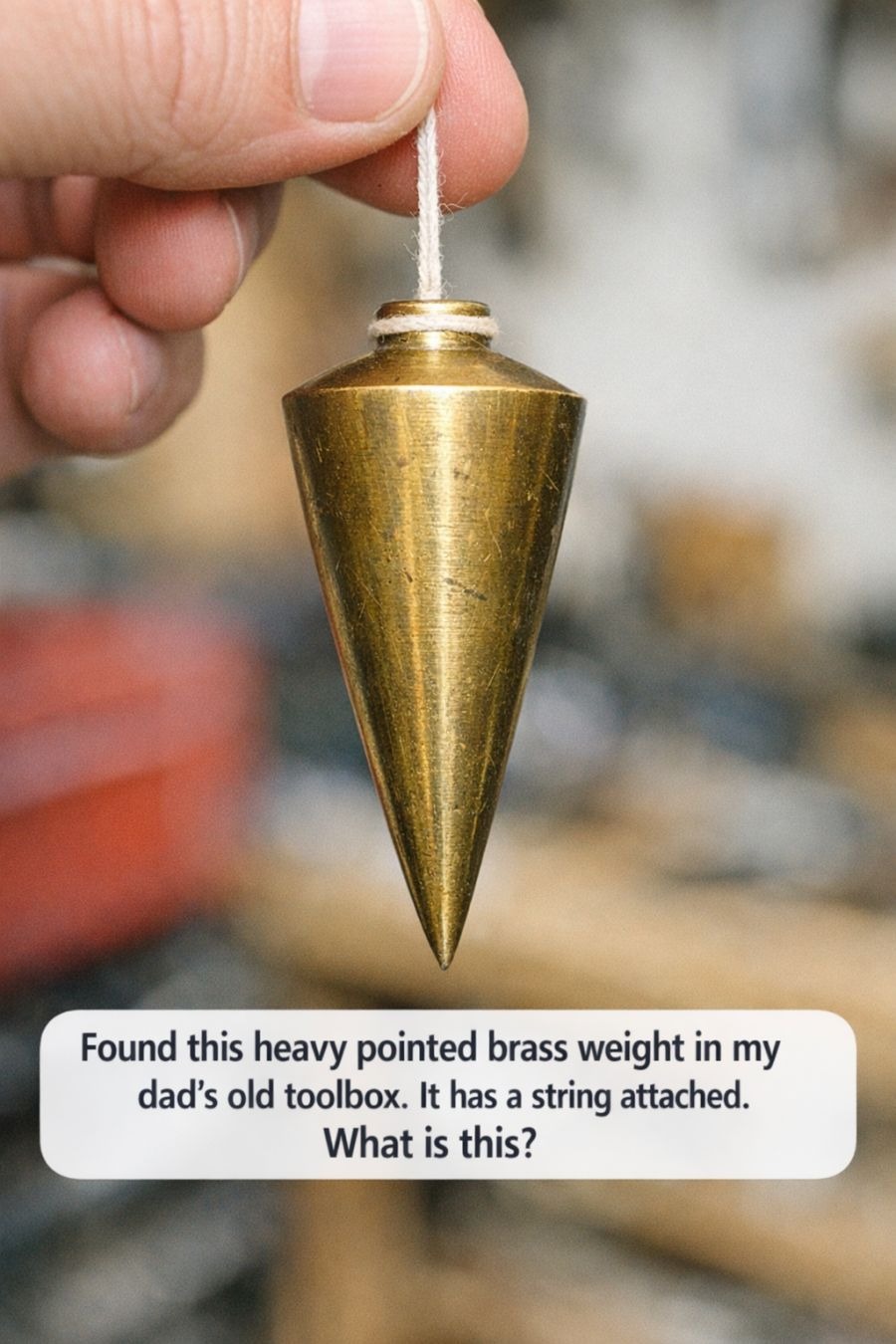
Discovering an intriguing object in a family member’s old toolbox can feel like uncovering a small piece of history. The dusty, aged items often hold stories of a bygone era, revealing the practical tools that once helped in crafting, building, or repairing. Among the wrenches and screwdrivers, you might encounter a peculiar, heavy pointed brass weight with a string attached, leading to questions about its purpose and origin.
Such a find can spark curiosity not only about the object itself but also about the person who used it. Was it a part of their daily toolkit? Did it play a role in building or repairing something significant? By exploring these questions, we can gain a deeper appreciation for the tools of the past and their users’ craftsmanship.
1. The Simple Answer: You’ve Found a Vintage Plumb Bob
The object you’ve discovered is most likely a plumb bob, a tool that dates back thousands of years. A plumb bob is a simple yet effective device used to establish a vertical reference line or ‘plumb line.’ Typically, a plumb bob consists of a pointed weight, often made of brass, with a string attached to its top. The pointed end ensures precision when determining vertical alignment.
Plumb bobs come in various sizes and weights, ranging from a few ounces to several pounds. The weight you found might weigh around 8 to 16 ounces, which was a common size for tradesmen. The brass construction not only provides durability but also resists corrosion, making it a preferred material for these tools.
2. What a Plumb Bob Does and Why It Has a String
A plumb bob is essentially an ancient tool used to ensure that constructions are perfectly vertical. When the string is suspended and the bob is allowed to hang freely, gravity pulls the weight directly downward, aligning the string with the true vertical. This simple principle is useful in a variety of construction tasks, from ensuring walls are perfectly upright to aligning posts and beams.
The string is crucial because it allows the plumb bob to hang freely and align accurately with gravity. The length of the string can vary depending on the application. In some cases, the string might be several feet long to accommodate tall constructions or deep measurements.
3. How Carpenters and Masons Used Plumb Bobs on Job Sites
Carpenters and masons have relied on plumb bobs for centuries to achieve precise vertical alignment in their projects. Before the advent of laser levels and modern technology, the plumb bob was an indispensable tool on construction sites. Masons used it to ensure that bricks and stones were laid in perfectly straight vertical lines, preventing any lean that could compromise structural integrity.
Carpenters employed plumb bobs to install walls, door frames, and windows, ensuring each was accurately aligned. By marking the ground or surface directly below the plumb bob’s point, they could measure and adjust structures to be perfectly plumb.
4. Key Features That Identify a Classic Brass Plumb Bob
Classic brass plumb bobs are distinguished by their tapered, conical shape, often featuring a pointed tip for precision. The weight is usually attached to a string through a small hole or loop at the top. Brass provides the tool with a characteristic golden hue and often develops a patina over time, which many collectors find desirable.
Some vintage plumb bobs may have manufacturer markings or engravings, indicating the maker or year of production. These details can help identify the tool’s origin and age, adding to its historical value.
5. How Old Is It? Dating Your Dad’s Toolbox Find
Dating a vintage plumb bob can be a fascinating journey into the past. Many plumb bobs were produced in the late 19th to early 20th centuries, a time when such tools were in high demand due to rapid urban development. Manufacturer markings, such as logos or patent numbers, can provide clues about the era of production.
If your plumb bob has any inscriptions or unique features, researching these can lead to identifying the period it was made. Consulting antique tool catalogs or online collector communities can also provide insights into its age and history.
6. Common Trades and Projects That Relied on Plumb Bobs
Plumb bobs were essential tools for various trades, including masonry, carpentry, and surveying. Masons used them to ensure that stone and brick structures were perfectly vertical, preventing future structural issues. Carpenters relied on plumb bobs for installing walls, door frames, and cabinetry, where precision was crucial.
Surveyors used plumb bobs to transfer points from the ground to a specific height, which was critical in mapping and laying out building sites. The tool’s versatility and accuracy made it indispensable across numerous fields.
7. Safety Tips for Handling and Storing a Heavy Pointed Weight
While a plumb bob is a simple tool, it requires careful handling due to its pointed tip and significant weight. When using a plumb bob, ensure that the area below is clear, as the point can cause injury or damage if it falls. Always secure the string properly to prevent accidental drops.
For storage, keep the plumb bob in a safe place where it won’t be accidentally knocked over or dropped. Consider wrapping it in cloth or placing it in a protective case to prevent tarnishing and accidental damage.
8. Cleaning and Restoring a Tarnished Brass Plumb Bob
Restoring a tarnished brass plumb bob can enhance its appearance and preserve its condition. To clean the brass, gently wipe it with a soft cloth to remove any dust or debris. For more thorough cleaning, use a mixture of lemon juice and baking soda to gently polish the surface.
If the patina is desirable, as it is for many collectors, avoid harsh chemicals or abrasive materials that can strip this natural aging. Regular gentle cleaning will maintain the brass’s natural beauty and integrity.
9. Is It Worth Anything? Collectible Value and Market Demand
The collectible value of a plumb bob depends on several factors, including its age, condition, and rarity. Vintage plumb bobs with unique designs or from well-known manufacturers can fetch higher prices among collectors. Market demand fluctuates, but there is a consistent interest in antique tools, particularly those in good condition or with historical significance.
If your plumb bob has maker’s marks or engravings, these can increase its value. Researching similar items sold at auction or through antique dealers can provide a sense of its market worth.
10. Cool Ways to Display or Repurpose a Vintage Plumb Bob
A vintage plumb bob can be a unique decorative piece, showcasing the elegance of traditional craftsmanship. Consider displaying it on a shelf or in a shadow box with other antique tools to create an interesting visual story. You can also use it as a paperweight or bookend, combining functionality with aesthetics.
For those interested in repurposing, a plumb bob can be incorporated into a pendant light fixture or used as a unique doorstop. Its weight and shape lend themselves to creative applications beyond their original purpose.
11. When a Toolbox Find Becomes a Family Heirloom
Finding a plumb bob in your dad’s toolbox isn’t just about discovering an old tool; it’s about reconnecting with a piece of family history. These tools often carry stories of past projects and achievements, serving as tangible links to previous generations.
Preserving and sharing the stories behind such finds can transform a simple tool into a cherished family heirloom. By documenting its history and significance, you ensure that future generations can appreciate the skills and dedication of those who used it before.
Found this heavy pointed brass weight in my dad’s old toolbox. It has a string attached.