
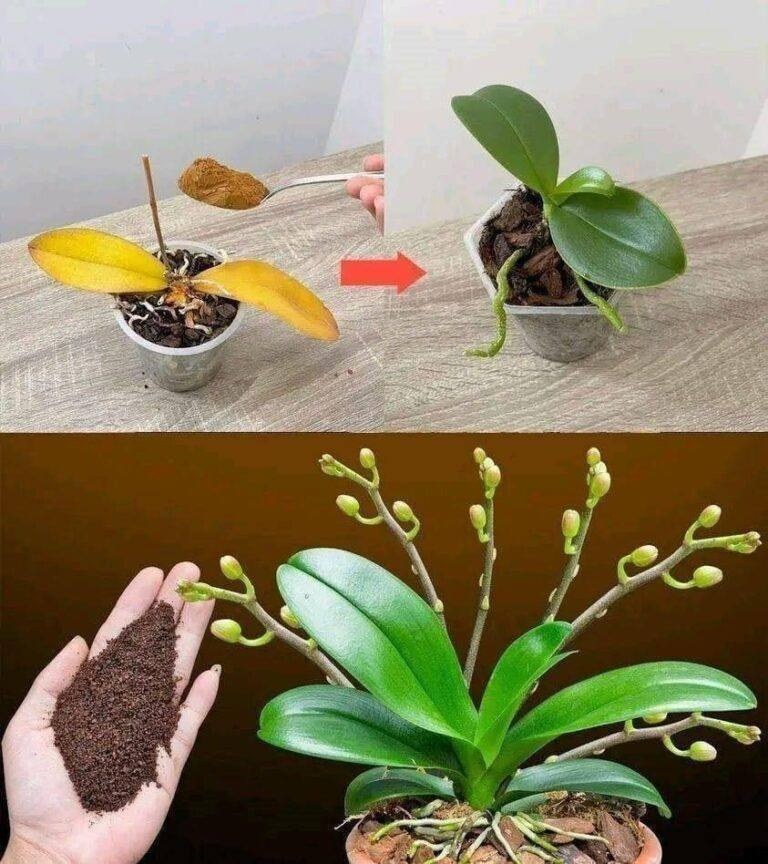
You’ve likely seen viral posts claiming:
“Add 1 teaspoon of [mystery solution] to your orchid—watch it bloom non-stop!”
These claims often point to household items like Epsom salt, hydrogen peroxide, cinnamon, or even milk as the “secret.” But while well-intentioned, most of these “hacks” are ineffective or even harmful to orchids.
Orchids—especially the common Phalaenopsis (moth orchid)—bloom based on environmental cues, not magical potions. Let’s separate fact from fiction and reveal what actually triggers bountiful blossoms.
❌ Debunking the “1 Teaspoon” Myths
“Miracle” Ingredient
The Claim
The Reality
Epsom salt (magnesium sulfate)
“Boosts blooming”
Only helpful if magnesium-deficient (rare). Too much harms roots.
Hydrogen peroxide
“Oxygenates roots, prevents rot”
Can kill beneficial microbes and damage delicate orchid roots. Not for routine use.
Cinnamon
“Natural fungicide that encourages blooms”
Safe as a topical antifungal on cut roots—but not a fertilizer or bloom booster.
Milk or banana water
“Natural potassium source”
Spoils quickly, invites mold, and provides negligible nutrients.
Bottom line: No single teaspoon of a kitchen ingredient will reliably trigger orchid blooms.
✅ What Actually Makes Orchids Bloom
Orchids bloom when their natural growth cycle is supported—not forced. Here’s the real “secret”:
🌿 1. Bright, Indirect Light
see continuation on next page
Place near an east or west-facing window.
Leaves should be olive green—dark green = too little light; red-tinged = too much.
🌡️ 2. A Temperature Drop
10–15°F (5–8°C) cooler at night for 2–3 weeks mimics dry-season conditions that trigger bloom spikes.
Example: 75°F (24°C) days → 60–65°F (15–18°C) nights.
💧 3. Proper Watering
Water only when roots turn silvery-white (not green).
Soak thoroughly, then let drain completely—never let orchids sit in water.
🌱 4. Fertilize Strategically
Use a balanced orchid fertilizer (20-20-20) at ¼ strength, once a week during growing season (spring/summer).
In early fall, switch to a high-phosphorus formula (10-30-20) to encourage bloom spikes.
🪴 5. Healthy Roots & Fresh Medium
Repot every 1–2 years in fresh orchid bark (not soil!).
Roots need airflow—compacted or soggy medium = no blooms.
💡 The Only “Teaspoon” That Might Help (Rarely)
If your tap water is very soft or your orchid shows yellowing between leaf veins (magnesium deficiency), you can use:
½ tsp Epsom salt per gallon of water, applied once every 2–3 months.
But for most growers, this is unnecessary—orchid fertilizers already contain balanced micronutrients.
🌸 How to Encourage Repeat Blooms (The Right Way)
After flowers fade:Option 1: Cut the spike just above the second node (from the base)—may rebloom in 8–12 weeks.
Option 2: Cut the spike at the base—orchid focuses energy on roots/leaves for a stronger bloom next season.
❤️ The Bottom Line
Orchids don’t respond to shortcuts—they respond to consistency, patience, and respect for their natural rhythms.
Instead of risking your plant with unproven “teaspoon tricks,” give it:
Bright light
A cool night drop
Infrequent, deep watering
Diluted, balanced feeding
When cared for properly, a healthy Phalaenopsis can bloom 1–2 times per year, with flowers lasting 2–6 months. That’s not magic—it’s orchid wisdom.
🌺 “The best fertilizer is the gardener’s attention.”
So skip the viral hacks. Water wisely, watch the light, and let your orchid bloom on its own time. You’ll be rewarded with elegant flowers that last for months—not minutes of internet fame.
