
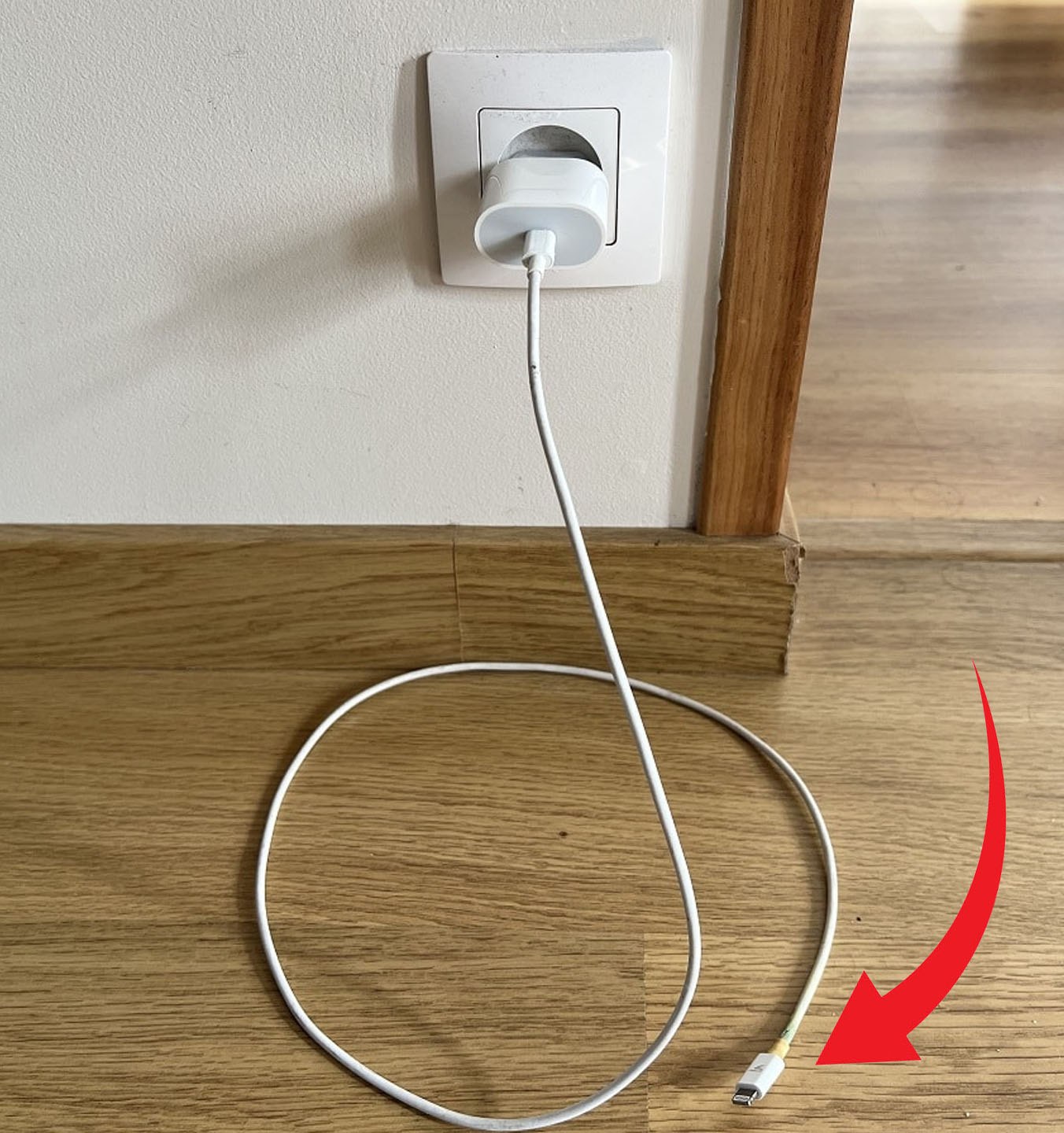
Why you should never leave a charger plugged in without a device
We’ve all done it: plugged in a charger and left it plugged in, even when no phone or device is connected. It’s convenient, quick, and we don’t really think about it. Yet, this seemingly harmless little action hides very real consequences, both for your electricity bill and for the security of your home. Curious to know what’s going on behind that wall socket? Here’s what you absolutely need to know.
Invisible consumption… but very real.
A charger plugged in, even without a phone connected, continues to draw power. This is called standby power or “phantom power.” Individually, the consumption seems negligible. But multiply it by the number of chargers in your home, used every day of the year, and you get a completely avoidable energy loss.
It’s a bit like a dripping tap: it seems insignificant at first, but by the end of the year, your bill can add up.
A well-known risk of overheating
A charger left plugged in all the time can overheat, especially if it’s old, poor quality, or poorly ventilated. Over time, this overheating can damage the wall outlet, the power strip, or the charger itself. In rare cases, it can even cause a fire. The right thing to do: always unplug your chargers after use.
A danger to children and animals
A cable lying around is a real temptation for children and pets. Between curious little hands and puppy teeth, accidents happen quickly: chewed cables, exposed plugs, ripped-out chargers… all potentially dangerous situations.
The solution is simple: store your chargers out of reach , in a drawer or a suitable box.
Good habits to adopt on a daily basis
-
Always unplug your chargers after use.
-
Use a power strip with a switch : a single button is all you need to cut off the power.
-
Regularly check the condition of cables and adapters . If a charger overheats or shows signs of wear, replace it immediately.
-
Opt for certified equipment (CE, NF, etc.) and avoid cheap counterfeits, which are often less reliable and more dangerous.
Modern and practical alternatives
Today, innovative solutions exist to avoid energy waste and enhance safety:
-
Automatic shut-off chargers , which cut off the power once the battery is full.
-
External batteries (power banks) are very useful for recharging your devices without staying plugged into the wall.
-
Smart power strips , equipped with individual switches or connected systems allowing real-time monitoring of consumption.
The essential safety checklist
To use your chargers safely:
-
Store them in a dry, well-ventilated place.
-
Never cover a charger while it is in operation (no cushions or papers placed on top of it).
-
Ensure compatibility between your devices, cables and adapters (always check the power ratings).
