
The Small Habit That Could Save You Money …And Prevent a Fire
In today’s world, our laptops are practically extensions of ourselves. We use them for work, school, streaming, shopping — you name it. And because we use them so often, the charger usually stays plugged in 24/7.
It feels harmless, right?
That’s exactly what I thought — until my electrician pointed something out during a routine inspection that completely changed my perspective.
Leaving your laptop charger plugged in when it’s not connected may seem like a minor habit. But it can quietly cost you money, waste energy, and even pose safety risks.
Here’s why I stopped doing it — and why you might want to, too.
The Hidden Cost of “Vampire Energy”
My electrician explained something called “vampire energy.” (Yes, that’s the real term.)
Even when your laptop isn’t attached, the charger still draws a small amount of electricity from the outlet. This is also known as phantom load — the power devices consume while technically “off.”
One charger might not seem like a big deal. But think about it:
- Laptop chargers
- Phone chargers
- Tablet chargers
- Gaming consoles
- Kitchen appliances
It adds up.
Individually, the energy drain is small. Collectively, across an entire home — and millions of homes — it becomes significant. That steady trickle of unused electricity increases your bill and contributes to unnecessary energy consumption.
It’s Not Just About Money
What really caught my attention wasn’t the cost — it was the safety risk.
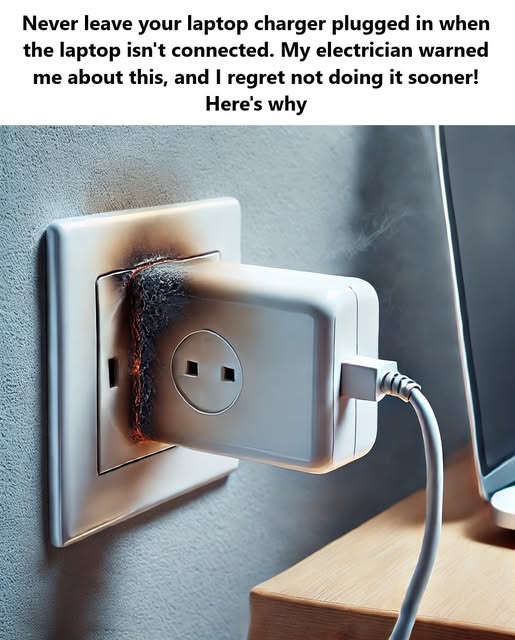
Chargers generate heat, even when they’re not actively charging a device. Over time, constant exposure to electricity can wear them down. If a charger has internal damage or a manufacturing defect, that heat can increase the risk of overheating.
- Sitting on carpet
- Tucked behind furniture
- Resting near papers or curtains
It’s rare, but electrical fires can start this way.
Unplugging your charger when it’s not in use is one of the simplest ways to reduce that risk.
The Environmental Impact Most People Ignore
Beyond your wallet and your home’s safety, there’s the environmental angle.
All that wasted “standby” energy contributes to higher overall electricity demand. More demand means more resource consumption and more carbon emissions.
Unplugging unused chargers is a small action — but when multiplied by millions of households, it becomes meaningful.
Sometimes sustainability isn’t about dramatic lifestyle changes. It’s about consistent, simple habits.
The Wear and Tear Factor
Another thing my electrician mentioned? Leaving chargers plugged in constantly can shorten their lifespan.
The continuous draw of electricity puts stress on internal components. Over time, that can lead to premature failure — meaning you’ll need to replace the charger sooner than expected.
It’s a small device, but replacing electronics frequently isn’t exactly cost-effective (or eco-friendly).
What Changed for Me
I’ll admit it — I used to leave my laptop charger plugged in purely out of convenience.
After hearing the explanation, I decided to change the habit. Now, when I unplug my laptop, I unplug the charger too. It takes two seconds.
Since then:
- I’ve noticed a slight dip in my electricity bill.
- I feel better knowing I’ve reduced a potential fire risk.
- I’m more mindful of energy use throughout my home.
It’s one of those tiny adjustments that brings unexpected peace of mind.
The Bottom Line
Unplugging your laptop charger when it’s not in use may seem insignificant — but it isn’t.
It can:
- Reduce wasted energy
- Lower your electricity bill
- Extend the life of your charger
- Minimize potential fire hazards
- Reduce your carbon footprint
All from one simple habit.
Sometimes the smartest home upgrades aren’t expensive gadgets or renovations. Sometimes, they’re just small, intentional changes in how we use what we already have.
And this one? It’s definitely worth the two seconds it takes.
You’ve just read, The Small Habit That Could Save You Money. Why not
