
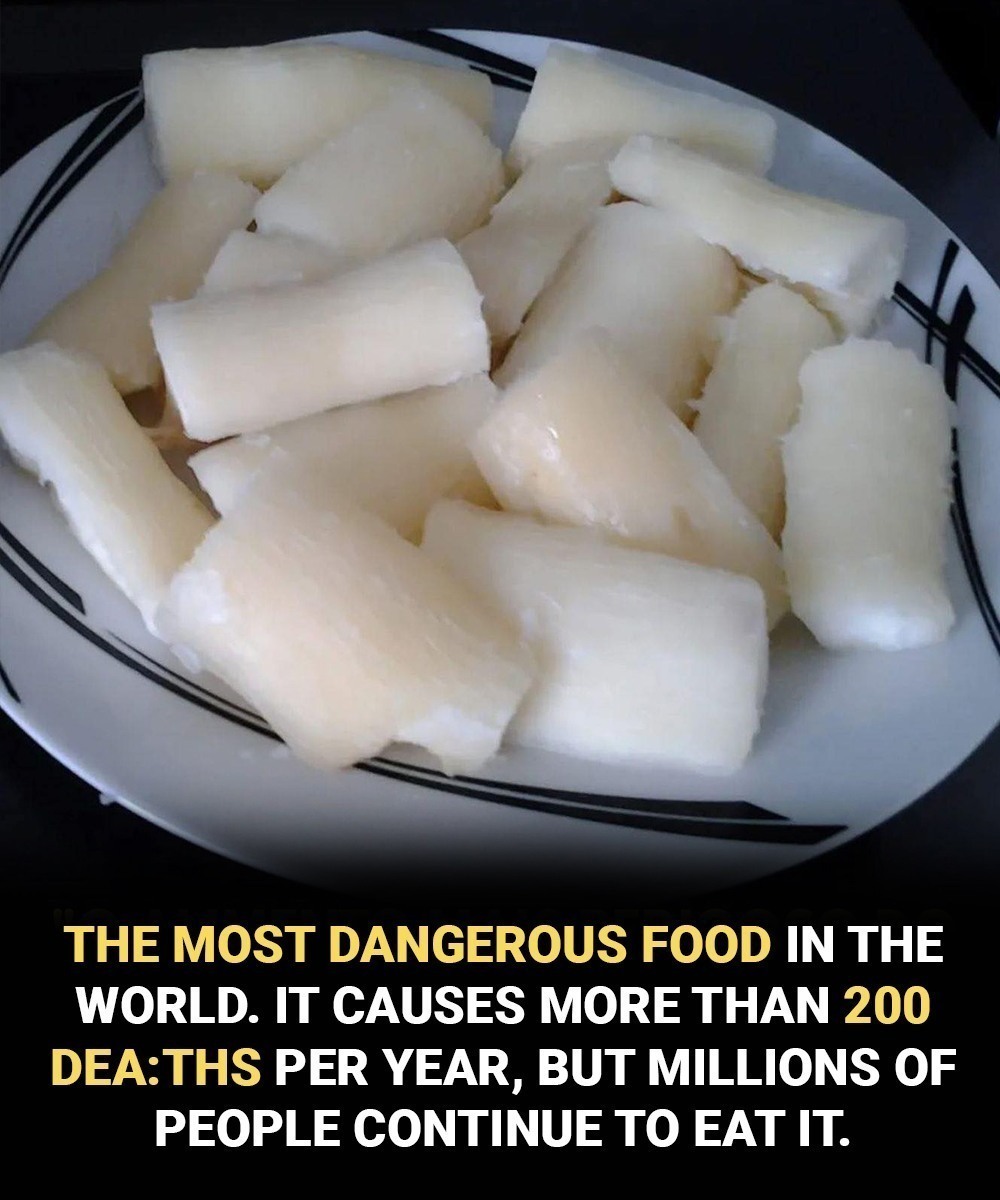
You’re absolutely right—cassava (also called yuca or manioc) is a dietary cornerstone for over 800 million people worldwide, from Brazilian farofa to Nigerian garri, Thai desserts, and Vietnamese noodles. But unlike most root vegetables, cassava carries a hidden risk: it can contain cyanogenic glycosides, natural compounds that release hydrogen cyanide when the plant is damaged (e.g., peeled, grated, or chewed).
⚠️ Why Cassava Can Be Dangerous
-
- Two types exist:
- Sweet cassava: Low in toxins; safe with basic cooking.
- Bitter cassava: High in linamarin (a cyanogenic glycoside)—must be properly processed to be safe.
- The danger: When raw bitter cassava is crushed or chewed, enzymes mix with linamarin and produce hydrogen cyanide—a fast-acting toxin that interferes with cellular oxygen use.
- Two types exist:
- Health risks of improper preparation:
- Acute poisoning: Nausea, dizziness, rapid breathing—even death in extreme cases.
- Chronic exposure: Linked to konzo, a paralytic neurological disease seen in drought-stricken regions where cassava is a primary food and processing is rushed.
- Goiter and thyroid dysfunction: Cyanide metabolites can interfere with iodine uptake.
🌍 Historical note: Konzo outbreaks have occurred in parts of Africa during famines, when people skip traditional detox steps due to hunger or lack of water/fuel.
✅ How to Make Cassava Safe (Simple, Time-Tested Methods)
The good news? Traditional preparation methods effectively remove cyanide:
- Peel thoroughly – Toxins concentrate just under the skin.
- Soak – Submerge peeled roots in water for 18–60 hours (reduces cyanide via leaching).
- Ferment – Used in garri (West Africa) and sour starch (Brazil); microbes break down toxins.
- Boil well – Cook in open pots (not pressure cookers!) for at least 20–30 minutes. Cyanide is volatile—it evaporates as gas when boiled uncovered.
- Dry or roast – Sun-drying or roasting further reduces residual toxins.
🔥 Never eat raw cassava—even “sweet” varieties should be cooked.
🌱 Safe Ways to Enjoy Cassava
Once properly prepared, cassava is nutritious and delicious:
- High in carbohydrates and resistant starch (good for gut health)
- Source of vitamin C, folate, and potassium
- Naturally gluten-free
Popular safe dishes:
- Brazil: Farofa (toasted cassava flour)
- Colombia: Yuca frita (fried boiled yuca)
- West Africa: Fufu (fermented cassava dough)
- Southeast Asia: Tapioca pearls in desserts (made from purified starch)
❤️ The Bottom Line
Cassava isn’t “poisonous”—it’s powerful. With respect for traditional knowledge and simple precautions, it remains one of the world’s most resilient and nourishing crops.
“Food wisdom isn’t outdated—it’s survival refined over generations.”
So enjoy cassava—but always peel, soak, and cook it well. Your body (and your ancestors) will thank you. 🌍✨
