
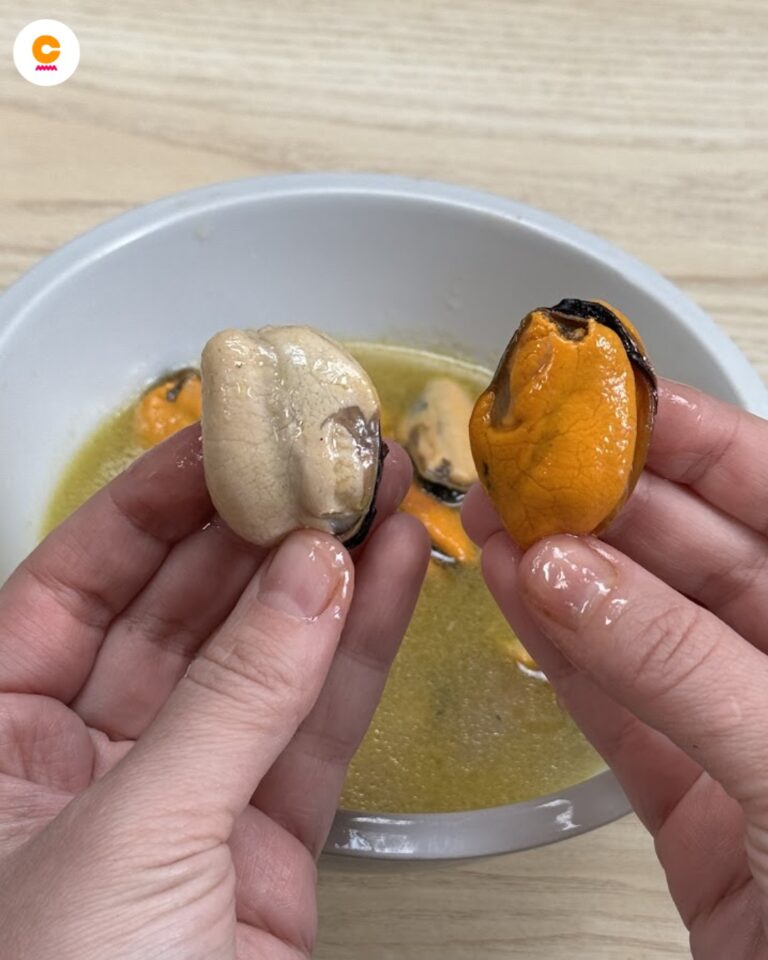
Have you ever wondered why some mussels are orange and others tend to be white? The color of mussels is a topic that intrigues many seafood enthusiasts: people often wonder why some mussels have a white or yellowish internal color, while others are a bright orange. The answer to this question is linked to several factors, including the sex of the mollusc, the stage of maturation and, in some cases, the variety.
Why Are There White Mussels and Orange Mussels?
There are several factors that influence the color of mussels : some are more decisive than others, as we will see, for example, gender. In any case, we assure you right away that white mussels and orange mussels have the same nutritional profile and that there is no difference with respect to human consumption. Here are the factors that determine the difference in color in mussels.
Sex: The Determining Factor
Not many people know that mussels also have a unique sexual gender, that is, they are either male or female (in nature, many species are hermaphrodites). Sex is one of the most determining factors:
Why Do Some Countries Chill Their Eggs While Others Leave Them Out?
Females. Mature female mussels generally have an internal orange color, more or less intense depending on the species and the season. This color is due to the presence of pigments linked to the maturation of the eggs. Not all females are orange, it also depends on the level of sexual maturation.
Males. Males, on the other hand, have a lighter internal color, tending towards white or yellow.
The color of mussels is an indicator of their sex but not only: however, it is not a determining factor for the quality of the product. Here are the other factors that influence their color.
The stage of maturation. Both males and females, at a young age, have a lighter internal coloration than mature adults.
Seasonality. Coloration can also vary depending on the time of year. During the breeding season, females tend to have a more intense coloration.
Different species. There are many species of mussels, each with slightly different characteristics. Some varieties may have more or less intense internal colors, regardless of sex.
Environmental conditions. The environmental conditions in which mussels live, such as water temperature, food availability, and salinity, can influence the color of their flesh.
