
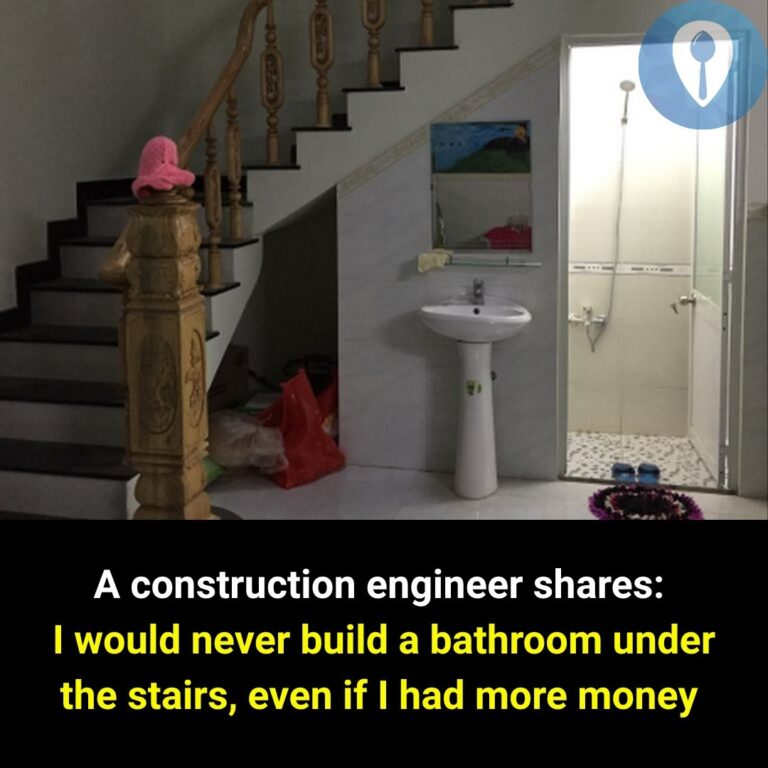
You’re remodeling your home.
Space is tight.
And the area under the stairs seems like the perfect spot for a half-bath or powder room .
But before you start knocking down walls, consider this:
 Building a toilet under the stairs is a controversial choice — and not just because of plumbing challenges.
From feng shui principles to practical drawbacks , there are strong reasons why many architects, designers, and traditional cultures advise against it.
Let’s explore the 7 key reasons — both symbolic and structural — why this space might be better used for a closet, reading nook, or storage.
 1. Feng Shui: Energy Flow (Qi) Is Disrupted
In feng shui , the ancient Chinese practice of harmonizing space, the staircase represents the flow of energy (Qi) through your home — like a river moving upward.
Placing a toilet under the stairs is considered a major energy no-no because:
The toilet “drains” positive energy just as it flushes waste
It interrupts the upward flow of Qi , potentially affecting health, wealth, and harmony
Being directly underfoot (literally) makes the space feel disrespected or oppressive
 Feng shui experts say: “You wouldn’t put a toilet in the middle of your living room — don’t put it under your main energy pathway.”
2. Structural & Space Limitations
The area under the stairs is often awkwardly shaped , with low ceilings, sloped walls, and support beams .
Building a bathroom here means:
Limited space for plumbing and ventilation
Difficulties installing a proper toilet, sink, or shower
Headroom issues — you may need to duck to use it
Higher construction costs due to custom fittings
 Bottom line: It’s often more expensive and less functional than using a flat, open area.
 3. Ventilation & Moisture Problems
Bathrooms need excellent ventilation to prevent:
Mold
Mildew
Musty odors
The space under the stairs is often enclosed and poorly ventilated , making it a breeding ground for moisture and bacteria — especially in humid climates.
Even with an exhaust fan, airflow is limited in tight, boxed-in spaces.
 4. Plumbing Can Be Tricky (and Costly)
Adding a bathroom under the stairs may require:
Running new water lines and drains through floor joists
Connecting to existing plumbing — which may be far away
Installing a macerating toilet (if gravity drainage isn’t possible) — which is noisy and expensive
 These hidden costs can double your budget quickly.
 5. Accessibility & Safety Concerns
A bathroom under the stairs may have:
Narrow entryways — hard for elderly or disabled users
Tight turning radius for wheelchairs or walkers
Poor lighting and cramped layout
This makes it inaccessible and potentially unsafe — especially for aging-in-place homes.
 6. Hygiene & Psychological Discomfort
Think about it:
You’re using the bathroom…
While someone walks directly above you .
You can hear their footsteps. Maybe even their voice.
This can feel:
Uncomfortable
Unhygienic (psychologically, if not physically)
Lacking privacy
Even if the structure is sound, the mental discomfort can make the space unpleasant to use.
 7. It Can Lower Property Appeal
When it comes time to sell, a bathroom under the stairs may turn off potential buyers — especially those familiar with feng shui or practical design.
Many see it as:
A waste of good space
A red flag for poor planning
Or even a superstitious omen
 Real estate agents often advise against it — it can hurt resale value .
Better Uses for the Space Under the Stairs
Instead of a bathroom, consider these smart, functional alternatives :
Storage closet (shoes, coats, cleaning supplies)
Pet nook with a bed and toys
Reading corner with a chair and bookshelf
Mini home office or desk nook
Wine cellar or bar area
Display space for art, photos, or collectibles
These options are practical, stylish, and universally appealing .
Final Thoughts
While building a toilet under the stairs is technically possible — and you’ll find examples online — it’s often a short-term solution with long-term drawbacks .
From feng shui energy flow to plumbing challenges and resale value , the cons usually outweigh the convenience.
So before you turn that under-stair space into a bathroom, ask yourself:
“Am I solving a real problem — or creating a new one?”
Because sometimes, the best design choices aren’t just about saving space —
they’re about respecting flow, function, and peace of mind .
